How Hospitals Can Become DPDP Compliant in 30 Days
A practical, week-by-week guide to securing patient data and avoiding ₹250 crore penalties.

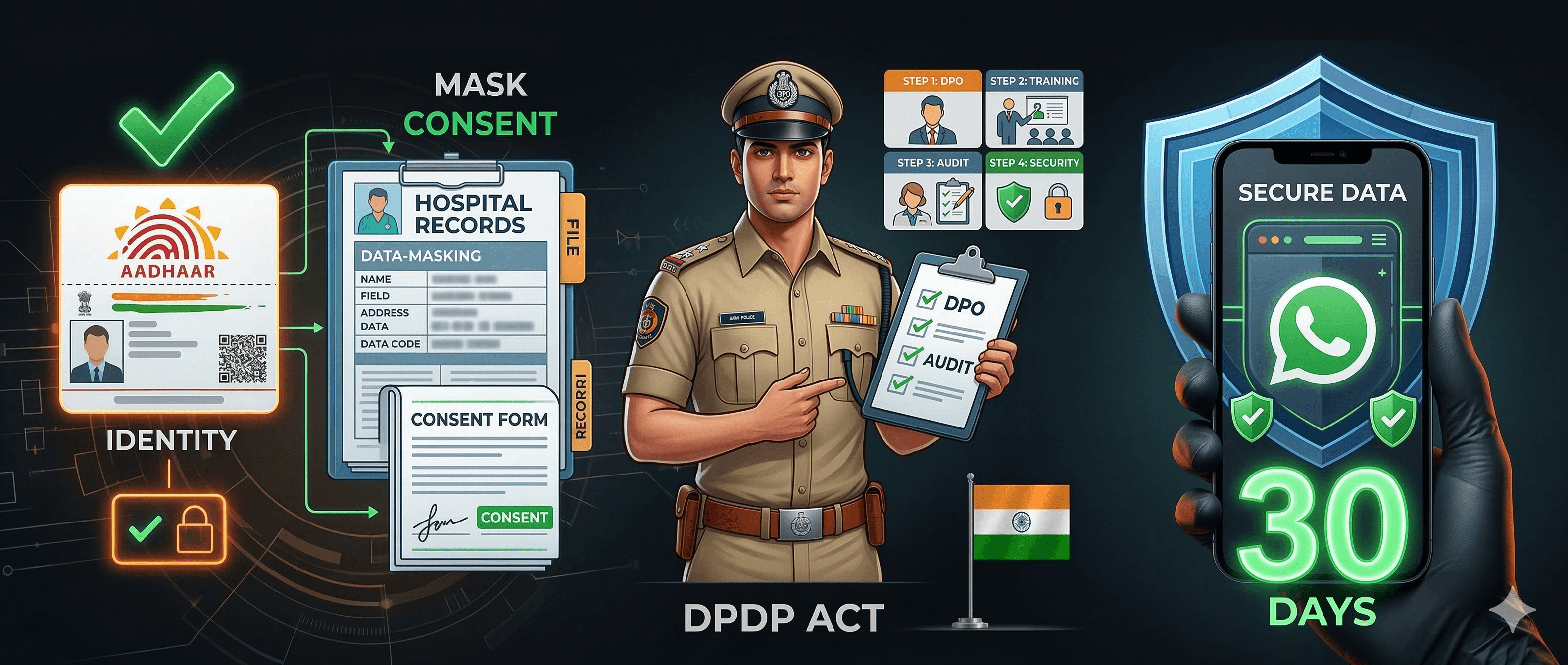
India's hospitals are sitting on some of the most sensitive personal data in the country. Patient names, Aadhaar numbers, medical histories, diagnoses, treatment records, insurance details, and billing information. All of it collected daily, across hundreds of interactions, by staff who were never trained to think about data privacy law.
The Digital Personal Data Protection Act 2023 changes that equation entirely. Full enforcement begins May 2027. For hospitals, the stakes are especially high. A medical data breach is not just a compliance event. It is a betrayal of patient trust that can close institutions and end careers. And the penalties under the Act go up to rupees two hundred and fifty crore.
The good news is that getting compliant does not require a six month IT project. Here is exactly what a hospital needs to do and how to get there in thirty days.
Week One: Know What You Have
The first step is a data audit. Map every type of patient and staff personal data your hospital collects. Where does it come from. Where does it live right now. Who has access to it. How long you keep it. Where it goes when you are done with it.
For most hospitals this audit will reveal the same things:
- Patient Aadhaar copies in WhatsApp chats
- Prescription scans in shared Google Drive folders
- Staff identity documents in email threads
- Insurance claim copies on reception desk computers with shared passwords
You cannot fix what you cannot see. The audit is not optional.
Week Two: Stop the Bleeding
Once you know where data lives, stop adding to the problem. This means replacing every WhatsApp-based document collection flow immediately.
The practical fix is secure document request links. Instead of asking patients or staff to send documents over WhatsApp, your team sends a unique encrypted link. The recipient uploads directly into a secure vault. The hospital gets access to what they need through a proper dashboard. The entire transaction has a consent record and audit trail attached automatically.
This single change addresses the most common and most visible compliance gap in Indian hospitals today.
Week Three: Secure What You Already Have
Existing patient records and documents need to be migrated into a system with proper security. This means:
- AES-256 encryption at rest
- Access controls that restrict who can view which documents
- An immutable audit log of every access event
This is also the week to implement role-based access. Your billing department does not need access to clinical records. Your reception staff does not need access to insurance claim histories. Segment access by role and document every permission decision.
Week Four: Build the Ongoing Compliance Process
Compliance is not a project you complete. It is a process you operate. Week four is about building the habits and systems that keep you compliant after the thirty days are up.
Written data retention policy. Specific deletion timelines for each document type. A prescription has a different retention requirement than an insurance claim. Document it and enforce it automatically.
Designated compliance point of contact. When a patient asks to see or delete their data, someone needs to know exactly what to do and be able to respond within the required timeframe.
Breach response plan. If something goes wrong, your hospital needs to notify the Data Protection Board of India within the required timeframe. Have the plan written before you need it.
Staff training. The most secure system in the world fails when a receptionist asks the next patient to just WhatsApp their Aadhaar because it is easier. Train every person who touches patient data.
What DPDP Compliance Looks Like in Practice
A compliant hospital in India looks like this:
- Patients receive a secure link at registration to upload their identity documents
- Those documents are encrypted before they touch any server
- Every access is logged automatically in a tamper-proof audit trail
- Documents are deleted when their retention period expires
- Any patient can request to see or delete their data and the hospital can respond within the required timeframe
- Staff can only access documents relevant to their role
- In the event of a breach, the hospital can demonstrate exactly what happened, when, and what data was affected
None of this is technically complex. It is operationally disciplined.
Why 30 Days is Enough
Hospitals that have switched to a proper document management system have found that the operational improvement pays for itself almost immediately:
- Staff spend less time searching for documents
- Audits become straightforward instead of panic-inducing
- Patient trust increases when they see a professional document collection process instead of a WhatsApp request
The thirty day timeline is achievable because the core of DPDP compliance for a hospital is not about rebuilding your entire IT infrastructure. It is about replacing three things:
- WhatsApp with secure document collection links
- Shared drives with encrypted organised storage
- Informal access with role-based controls and audit trails
Start today. May 2027 sounds far away until you are three months from the deadline trying to build a compliance system from scratch.
The 30-Day Compliance Checklist
| Week | Action | Status |
|---|---|---|
| Week 1 | Complete data audit — map all personal data | |
| Week 1 | Identify all WhatsApp document collection flows | |
| Week 2 | Deploy secure document request links | |
| Week 2 | Stop all WhatsApp-based document collection | |
| Week 3 | Migrate existing documents to encrypted storage | |
| Week 3 | Implement role-based access controls | |
| Week 4 | Write data retention policy with deletion timelines | |
| Week 4 | Appoint compliance point of contact | |
| Week 4 | Write breach response plan | |
| Week 4 | Train all staff who handle patient data |
Sakshya provides secure document collection links, zero-knowledge encrypted storage, and immutable audit trails built specifically for Indian healthcare organisations. We can get your hospital DPDP compliant in 30 days.
Write to us at help@sakshya.io
Tags: #DPDPCompliance #HospitalDocumentManagement #HealthcareDataPrivacyIndia #PatientDataProtection #DPDPAct2027 #DocumentManagementIndia #MedicalRecordsSecurity #HealthTechIndia #StartupIndia
You may also like
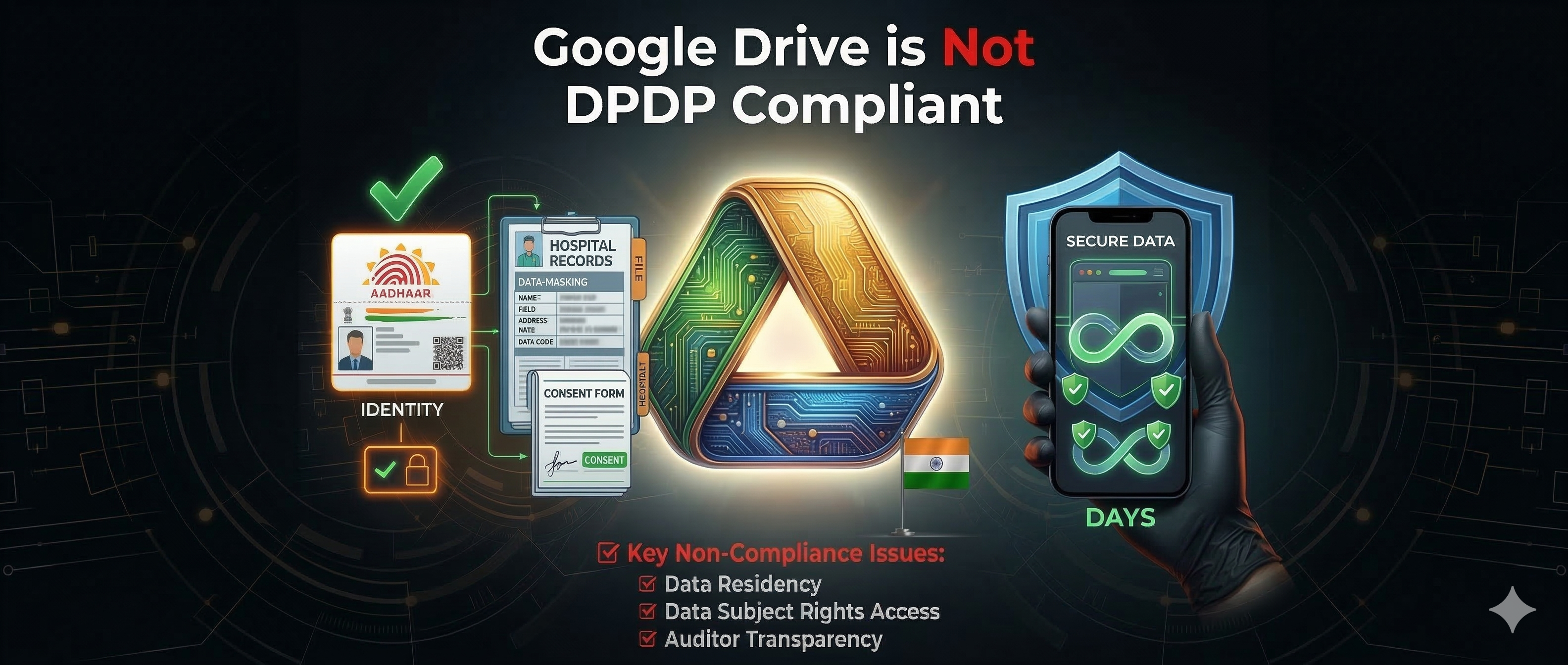
Google Drive is Not DPDP Compliant
If you work at an Indian organisation of any size, there is a very high chance your team is using Google Drive to store sensitive documents. Patient records. Employee Aadhaar copies. Vendor contracts. It feels safe. It is not.
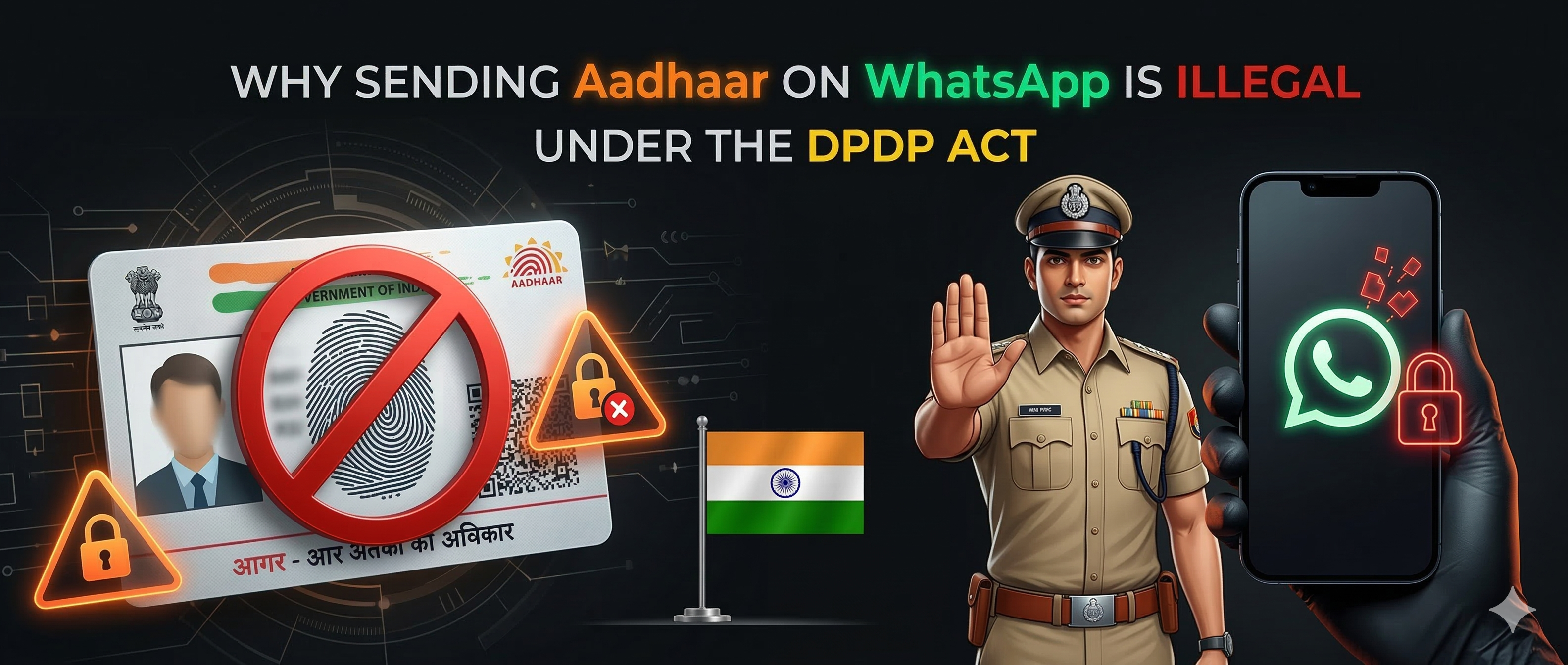
Why Sending Aadhaar on WhatsApp is Illegal Under the DPDP Act
Open your WhatsApp right now. Scroll back six months. There is a ninety percent chance you will find an Aadhaar card. Maybe yours. Maybe a family member’s. Maybe someone you sent it to for a hotel check-in, a job application, a school admission, or a rental agreement.
Secure your data infrastructure.
Stay ahead of DPDP compliance with Sakshya's AI-first document gateway.